Walk into any supermarket or butcher shop, and you'll come across labels like grass-fed, grass-finished, organic beef, and grain-fed beef. These terms often guarantee healthier or more sustainable products, but don't always explain what those labels actually mean.
This guide points out the primary distinctions between these labels. It explains the different production systems and their impacts on meat quality, nutritional composition, environmental sustainability, and farming practices. These can help you decide if grass-fed beef is better or not.
Key Takeaways
- Grass-fed beef typically has higher concentrations of omega-3 fatty acids, conjugated linoleic acid (CLA), and antioxidants than grain-fed beef, and is also lower in total fat.
- Grass-finished beef comes from cattle raised on forage all their lives without being fed grain in a feedlot before slaughter.
- Pasture-based farming can promote animal welfare, soil health, and biodiversity (with environmental effects depending on the management of the farm).
- Grass-fed beef usually costs more because cattle grow more slowly and spend longer grazing before reaching market weight.
- Choosing high-quality grass-fed beef from trusted British farms can ensure you get nutritional value and better flavour while supporting responsible farming practices.

What Is Grass-Fed Beef?
Grass-fed beef refers to meat that comes from cattle that obtain most or all of their nutrition from pasture, hay, silage, and other forage rather than cereal grains. Because cattle evolved as grazing animals, grass is their natural diet and supports normal rumen function.
The definition of grass-fed beef, however, can vary from country to country depending on the organic certification regulations. Some grass-fed cattle spend most of their lives grazing before receiving a small amount of grain during the finishing stage. Others remain entirely on forage throughout their entire lives.
So, is grass-fed beef better? Grass-fed beef generally tastes better than grain-fed beef. From a nutritional standpoint, it has a higher concentration of omega-3 fatty acids, a greater ratio of omega-3 to omega-6 fatty acids, and a higher level of conjugated linoleic acid (CLA) than grain-fed beef. Good pasture management also leads to improved animal welfare and soil health.
Grass-Fed vs Grass-Finished
Grass-fed is often mistaken for grass-finished beef, but they're not always the same. Grass-finished beef comes from cattle raised on a grass diet for their entire lives. Some farmers raise cattle on pasture and then feed grain for weeks or months before slaughter, but still label their product as grass-fed. If you don't want grain-fed beef, look for grass-finished beef instead of just relying on a grass-fed label.
Grass-Fed vs Organic Beef
Many beef lovers think that certified organic necessarily means grass-fed, but it doesn’t. There are strict production requirements for organic beef, including the use of growth hormones, antibiotics, housing, and feed, as well as ethical farming practices. But organically grown grain isn’t prohibited by certified organic standards. This means that beef from grain-fed cattle can also be certified as organic.
Grass-finished beef from independent, certified organic farmers who are fully traceable is the most transparent choice if you want to be sure the beef comes from cattle raised on a strict grass diet.
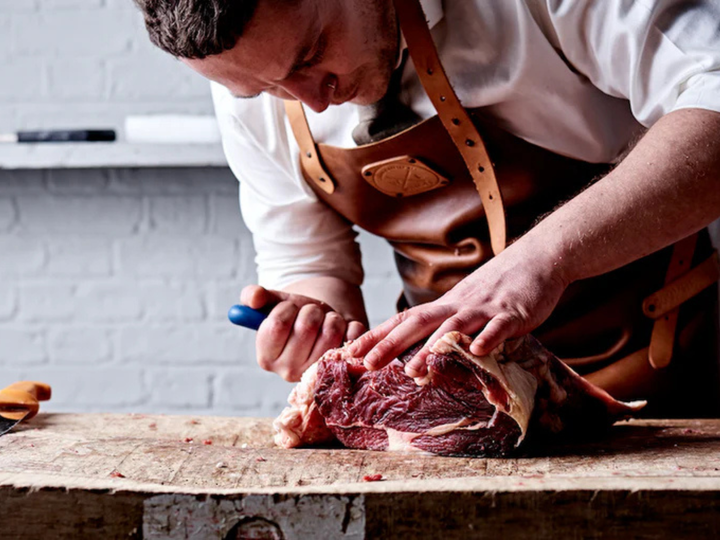
At The Organic Butchery, our organic grass-fed beef comes from carefully selected British farmers who rear cattle slowly on certified organic pasture. Our skilled traditional butchers then expertly prepare different cuts of beef with precision. They mature every cut on bone for 28 days to develop exceptional tenderness and depth of flavour.
Grass-Fed Beef
Exceptional flavour from slow-grown British beef.
Shop NowGrass-Fed Beef vs Grain-Fed Beef
The main distinction between grass-fed beef and grain-fed beef comes down to how farmers raise cattle, which explains these nutritional differences.
Grass-Fed Systems
In grass-fed beef production, farmers allow cattle to spend most of their lives grazing pasture and eating forage. During winter, they often feed their cattle hay or silage when fresh grass becomes unavailable.
This proper pasture management allows cattle to express natural behaviours, converting forage that humans can't digest into grass-fed beef. This is also one of the reasons why grass-fed beef has a more savoury flavour compared to grain-fed options.
Grain-Fed Systems
Most grain-fed cattle begin life on pasture before moving to a feedlot for finishing. Inside these facilities, producers often feed energy-dense rations containing corn and other grains. This cattle feed encourages rapid weight gain and greater marbling.
Unlike the United States, where most cattle are grain finished, most cows in the UK spend a large proportion of their life grazing grass, depending on the production system, with some taking an extra finishing period with cereals (AHDB, 2023).
Conventional beef production generally costs less than pasture-based systems because grain-fed cows reach slaughter weight faster.
Animal Welfare Differences
Another common reason why people choose grass-fed beef is animal welfare. Pasture-based farming systems usually allow grass-fed cattle to roam freely and graze naturally. These management practices allow the animals to express their natural behaviour than intensive finishing systems.
By contrast, feedlot cattle spend their final months in confined conditions, where there’s an increased risk of diseases. Some feedlot cows experience digestive disorders because large amounts of rapidly fermentable grain differ substantially from the forage-based diets they’re used to.
Antibiotic Use
The use of antibiotics in UK livestock has fallen sharply over the past decade. The UK-VARSS 2023 report found that antibiotic sales for food-producing animals were 25.7 mg/kg in 2023, a 59% reduction since 2014. Sales of the highest-priority critically important antibiotics also remained very low, at less than 0.5% of total sales.
These are good statistics because unnecessary antibiotic use can contribute to antibiotic-resistant bacteria, which pose an increased risk to animal and human health. Once the bacteria become resistant to commonly used antibiotics, infections become much harder to treat.
Grass-fed cattle need fewer routine treatments than animals kept in more intensive systems because they usually live outdoors at lower stocking densities. However, good farmers still use antibiotics when animals become ill. Treating animals responsibly protects animal welfare and prevents unnecessary suffering.
Quick Comparison Table
| Category | Grass-Fed Beef | Grain-Fed Beef |
| Diet | Grass, pasture, forage | Grain-based finishing diet |
| Fat content | Usually leaner | Often more marbled |
| Flavour | Deeper, richer, more savoury | Milder, softer |
| Animal welfare | Often more pasture access | Varies by system |
| Environment | Can support soil and biodiversity when well managed | Often faster finishing, but more intensive feed use |
| Price | Usually higher | Usually lower |
| Cooking | Benefits from careful cooking | More forgiving due to fat |

Is Grass-Fed Beef Better Nutritionally?
Many health-conscious consumers choose grass-fed beef because of its nutritional profile and flavour. Both grass-fed beef and grain-fed beef provide excellent protein, iron, zinc, vitamin B12, and other nutrients. However, the differences in diet directly influences the composition and flavour of the meat.
A study by Daley et al. (2010), published in the Nutrition Journal, found that cattle raised on pasture produce beef with a more favourable fatty acid composition than grain-fed beef. This includes higher levels of omega-3 fatty acids and CLA, as well as higher concentrations of antioxidants and vitamins. Here are some of the nutritional benefits of grass-fed beef.
Lower Total Fat
Compared with grain-fed, grass-fed beef generally contains less total fat, fewer calories, and less visible excess fat. It also tends to be lean beef, which is perfect if you want nutritious red meat with lower energy density.
The comprehensive review by Daley et al. (2010) also found that grass-fed beef generally contains less total fat than grain-fed beef. The researchers also established that grass-fed beef generally contains slightly less saturated fat, although both types of beef still add saturated fat to the diet.
More Omega-3 Fatty Acids
One of the established health benefits of grass-fed beef is omega-3 fatty acids. The research by Daley et al. (2010) also found that grass-fed beef contains approximately two to four times more omega-3 fatty acids than grain-fed beef, producing more favourable fatty acid profiles.
Although fatty fish and wild fish remain much richer sources of EPA and DHA, eating grass-fed beef can contribute additional omega-3 fats as part of a balanced diet.
Higher CLA
Another nutritional advantage is CLA. Because grass-fed cows consume a forage-based diet, their meat generally contains two to three times more CLA than grain-fed beef, with some studies reporting even greater differences depending on pasture quality and season (Daley et al., 2010).
Daley et al.'s (2010) review in Nutrition Journal also found that grass-fed beef consistently contains more CLA than grain-fed beef because a forage-based diet alters the fatty acid composition of the meat. That said, it's best to view grass-fed beef as one source of naturally occurring CLA within a balanced diet rather than as a functional food or treatment for disease.
Higher Vitamins and Minerals
Daley et al. (2010) also reported that pasture-fed cattle produce beef with higher levels of antioxidant compounds, particularly vitamin E and beta-carotene. Because beta-carotene is a precursor to vitamin A, grass-fed beef contains higher concentrations of vitamin A than grain-fed beef.
Grass-fed beef contains substantially more beta-carotene than grain-fed beef, although the exact difference varies among breeds and production systems. The nutritional value of grass-fed beef also includes higher levels of iron, magnesium, zinc, and selenium, as well as high-quality protein and vitamin B12.

Does Grass-Fed Beef Taste Better?
Yes. Many people think grass-finished beef has a richer, earthier flavour because the animals consume diverse pasture plants throughout their entire lives. In contrast, grain-fed beef generally develops greater marbling, producing a buttery texture, but the flavour is mild.
Grass-fed beef is objectively more flavourful than grain-fed options. If you value bold meat quality, you may prefer grass-finished beef. If tenderness and heavy marbling matter more to you, grain-fed beef may suit your palate better.
Is Grass-Fed Beef Better for the Environment?
The environmental discussion surrounding grass-fed beef is more complicated than many marketing claims suggest.
Environmental Benefits of Grass-Fed Beef
Properly managed grazing can improve soil health, increase biodiversity, and support environmental sustainability. Regenerative farms rotate cattle across pasture, allowing plants to recover between grazing periods. This helps capture and sequester carbon by increasing soil organic matter.
A meta-analysis published in Global Change Biology found that improved grazing management can increase soil organic carbon stocks, although the extent of carbon sequestration varies widely between regions, soil types, and grazing systems (Conant et al., 2017).
Grazing animals also use land unsuitable for growing crops. In many regions, farmers can't grow corn or other human food crops economically on steep or marginal land. This makes grazing an efficient use of such lands.
Environmental Trade-Offs
No farming system is without environmental impact, and grass-fed beef is no exception. Grass-fed cattle can take longer to reach maturity, which may increase their lifetime methane emissions compared with faster, more intensive systems.
However, measuring sustainability through emissions per kilogram of meat overlooks the wider role of well-managed grazing systems. Cattle can convert grass from permanent pasture and land unsuitable for growing crops into food, while reducing reliance on imported feeds, such as soya, fertilisers, and other inputs associated with intensive feed production.
Well-managed pasture also supports soil health, nutrient cycling, water retention and biodiversity. The extent of these benefits depends heavily on how farmers manage the land, so not every grass-fed system performs in the same way.
Rather than claiming that grazing completely offsets the emissions from cattle, a more useful comparison considers the whole farming system: how farmers use the land, where the feed comes from, the inputs required, the health of the soil and the wider impact on nature.
Are the Health Benefits Proven?
Several observational studies and controlled feeding studies support the nutritional advantages of grass-fed beef. For example, a randomised clinical trial by McAfee et al. (2011) found that replacing conventional beef with pasture-fed beef improved participants' blood omega-3 status without adverse effects on blood lipids.
Evidence also suggests that consuming lean red meat as part of a healthy dietary pattern doesn't necessarily increase cardiovascular risk. A systematic review published in Nutrition Journal concluded that the most consistent differences involve omega-3 fatty acids, CLA, vitamins A and E, and antioxidant content rather than dramatic changes in protein or mineral content (Daley et al., 2010).
Current evidence therefore supports modest but meaningful health benefits, especially regarding lipid composition. However, researchers continue investigating whether these nutritional differences translate into measurable long-term improvements in human health.
Is Grass-Fed Beef Worth the Higher Price?
If your main goal is affordability, grain-fed beef is usually more affordable because producers finish animals more quickly. However, many consumers willingly pay more for grass-fed beef because they value improved meat quality, better animal welfare, responsible organic farming, and potential health and environmental benefits.
Rather than eating large amounts of inexpensive meat, choose smaller portions of premium grass-fed beef as part of balanced meat consumption.
How to Buy High-Quality Grass-Fed Beef
When shopping for beef, don't rely solely on front-of-pack marketing. Instead, look for:
- 100% grass-finished or grass-fed breed labels.
- Certified organic certification if organic production matters to you.
- Independent standards, such as the Soil Association Organic or Pasture for Life Certified.
- Clear information about where the cattle were raised.
- Transparency regarding feeding practices throughout the animals' whole lives.
Remember that not all labels mean the same thing. Asking your butcher where the meat comes from often provides better information than marketing language alone.
At The Organic Butchery, we offer award-winning certified organic grass-fed beef, including steaks, roasting joints, slow-cooking cuts, mince, bones, and broths. If you're looking for variety, our wider organic meat collection also includes organic lamb, chicken, duck, turkey, salmon, and nitrate-free bacon. Read our guides on "What is organic meat?" and "Is organic meat better?" to understand the real quality behind the traditional butchery from farm to table.
Frequently Asked Questions
Is Grass-Fed Beef Healthier?
Grass-fed beef offers several nutritional advantages over its grain-fed counterparts. It generally contains more omega-3 fatty acids, higher levels of CLA, and less total fat. However, no single food can determine your health. The biggest health benefits come from eating real food and following a balanced diet rich in vegetables, wholegrains, and healthy fats. Grass-fed beef can be a nutritious choice, but your overall eating pattern and diet matter more than choosing one type of beef.
Is Grass-Fed Beef Less Inflammatory?
Current evidence doesn't show that grass-fed beef directly reduces inflammation. However, its higher omega-3 content and healthier fatty acid profile may make it a better choice than its grain-fed counterparts. However, your overall diet has a much greater influence on inflammation than any individual food, so focus on eating a wide variety of minimally processed foods.
Is Grass-Fed Beef Good for Heart Health?
Grass-fed beef has modest heart health benefits because it contains more omega-3 fatty acids and slightly less total fat than many grain-fed options. Pasture-fed beef can improve blood omega-3 levels, but it still contains saturated fat. Enjoy it in moderation as part of a balanced diet, rather than relying on it alone to support heart health.
Can You Eat Grass-Fed Meat If You Have Diabetes?
Yes, you can enjoy grass-fed meat as part of a healthy, balanced diet. It's naturally high in protein and low in carbohydrates, which makes it suitable for many blood sugar management plans. Choose lean cuts where possible and serve them with vegetables and wholegrains. If you have diabetes, follow the advice of your healthcare team regarding portion sizes and overall diet.
What's the Unhealthiest Meat to Eat?
Heavily processed meats, such as bacon, sausages, salami, and cured meats, are generally less healthy than fresh beef. Eating large amounts increases the risk of bowel cancer and other health conditions. Fresh beef, however, can be part of a balanced diet when you eat it in moderation. Always cook meat thoroughly and handle it safely to reduce the risk of pathogenic bacteria.
What Are the Disadvantages of Grass-Fed Beef?
Grass-fed beef costs more because cattle grow more slowly and often remain on pasture for longer. Some people also prefer the milder flavour of beef from grain-fed cattle. From an environmental perspective, grass-fed beef can improve soil health when managed well, but it still requires land, water, and fossil fuels to produce. If you want beef raised entirely on forage, choose grass-finished beef, which means the cattle were not fed grain before slaughter.
Final Thoughts
So, why is grass-fed beef better? Current scientific evidence supports several genuine advantages. Compared with grain-fed beef, grass-fed beef generally contains more omega-3 fatty acids, higher concentrations of CLA, greater antioxidant levels, and lower total fat. Many pasture-based farms also prioritise animal welfare, responsible land management, and ethical farming practices.
At the same time, don't fall for oversimplified claims. Grass-fed beef isn't automatically healthier in every respect, nor does every pasture-based farm achieve identical environmental outcomes. Grain-fed beef is still a nutritious source of protein, iron, zinc, and vitamin B12.
That said, choosing high-quality grass-fed beef from reputable producers has better nutritional advantages and supports sustainable farming systems. Grass-fed beef can be part of healthy eating when you combine it with a balanced diet rich in vegetables, whole grains, legumes, and fatty fish.
References
- Agriculture and Horticulture Development Board. (2023). The GB beef industry. AHDB.
- Daley, C. A., Abbott, A., Doyle, P. S., Nader, G. A., & Larson, S. (2010). A review of fatty acid profiles and antioxidant content in grass-fed and grain-fed beef. Nutrition Journal, 9(10).
- McAfee, A. J., McSorley, E. M., Cuskelly, G. J., Fearon, A. M., Moss, B. W., Beattie, J. A. M., Wallace, J. M. W., Bonham, M. P., Strain, J. J., & Woodside, J. V. (2011). Red meat consumption: An overview of the risks and benefits. Meat Science, 84(1), 1–13.
- Scollan, N. D., Dannenberger, D., Nuernberg, K., Richardson, I., MacKintosh, S., Hocquette, J. F., & Moloney, A. P. (2014). Enhancing the nutritional and health value of beef lipids and their relationship with meat quality. Meat Science, 97(3), 384–394.
- Van Vliet, S., Provenza, F. D., & Kronberg, S. L. (2021). Health-promoting phytonutrients are higher in grass-fed meat and milk. Frontiers in Sustainable Food Systems, 4, 555426.
- Veterinary Medicines Directorate. (2024). UK veterinary antibiotic resistance and sales surveillance (UK-VARSS) annual report: 2023. Department for Environment, Food & Rural Affairs.
- World Cancer Research Fund/American Institute for Cancer Research. (2018). Diet, nutrition, physical activity, and cancer: A global perspective. Continuous Update Project Expert Report.