With some patience and some gentle heat, quality bones will pay you back with depth, richness, and taste that no stock cube can ever hope to compete with. Bones, whether from beef, chicken, or lamb, have been used for centuries to make soups, stews, and sauces. It’s good, practical, and respectful cooking that uses up an entire animal.
This guide explains how to make bone broth at home and cook each type, be it chicken, beef, lamb, or duck, for just the right amount of time. If you choose to use a slow cooker or an Instant Pot, bones from trusted, certified organic British farms can make all the difference.

What is Bone Broth, and Why Does Quality Matter?
Making bone broth involves simmering bones in water, along with veggies and herbs, for a long time. Unlike other vegetable or meat stock, which cooks for a short time, bone broth cooks for an extended period, which draws out collagen, amino acids, and minerals from the bones and connective tissue. If you chill your broth, you’ll notice that good quality broth will set, or gel, because collagen is released during the cooking process.
Bone Broth vs Traditional Stock
While traditional stock is normally simmered for two to four hours, bone broth is typically cooked for 12, 24, or 48 hours, which is more than enough time for connective tissue to break down. Don’t boil it; gentle simmering is what you want. Small bubbles rising to the surface mean you’re doing it just right, which will also keep it clear, not cloudy.
Why Organic Bones Make a Difference
If you’re planning to use a day-long stovetop method, the bones you choose can make a big difference. When you choose certified organic bones, you’re using bones from animals that were not exposed to routine antibiotics or synthetic growth promoters. The animals were allowed to roam, eat, and grow naturally, and were cared for with love.
At The Organic Butchery, we source from local, carefully selected farms in the West Country. Many of these farms have been in the hands of the same families for generations. Our award-winning organic meat collection has received accolades from Taste of the West, Great Taste Awards, and Best of Organic Market (BOOM).
Our skilled butchers are the heart of our operation. They prepare every cut with precision and respect, including the bones that become your broth. When you choose from our dedicated organic bones collection, you know exactly where your bones come from and how the animals were raised.

Ingredients You Need to Make Bone Broth
A classic bone broth starts with simple ingredients and the right combination of each ingredient. First and foremost, you need good-quality bones.
Best Bones to Use
Not all bones produce the same broth. Some are definitely better for broth than others. The secret to a great broth lies within the connective tissue of each bone. The most collagen-rich bones are the ones with the most cartilage, joints, and marrow.
Beef Bones
Beef broth is a classic and produces a rich, savory flavour.
- Marrow bones provide body and fat to the broth.
- Knuckle joints are full of collagen and provide structure to the broth.
- Osso buco combines well with a good balance of marrow and connective tissue.
- Oxtail is packed with gelatin and flavour, thanks to the abundance of joints.
If you want to make an outstanding beef bone broth, consider the following bones:
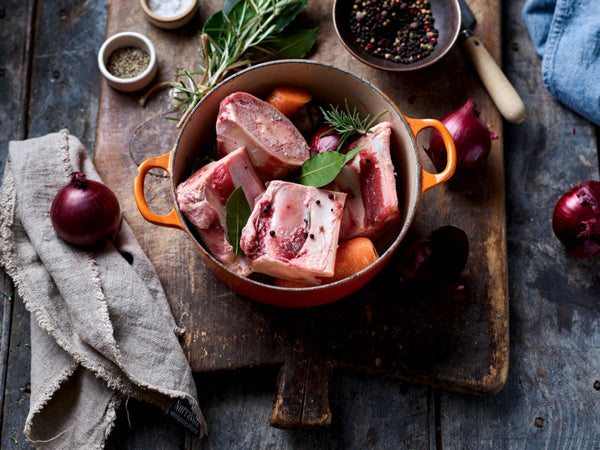
- Organic Beef Marrow Bones are rich in marrow for depth and texture.
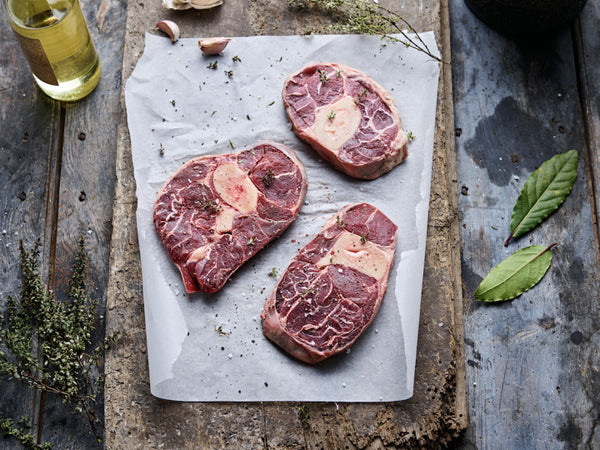
- Organic Beef Osso Buco has a superb balance of bone and connective tissue.
- Organic Oxtail is naturally high in collagen and ideal for thicker stock.
- Organic Beef Knuckle Joint is perfect for long-simmered broths due to its connective tissue content.
Poultry Bones
Poultry bones, especially from chicken and duck, make bone broths rich in nutrients and flavour.
- A whole chicken carcass forms an excellent base.
- Chicken bones and feet also release substantial collagen.
- Wings and necks can also contribute valuable connective tissue.
You can start with our Organic Chicken Carcass, which is ideal for homemade chicken bone broth, especially if you want a clean, well-rounded flavour.
Duck bones produce a darker, more aromatic broth than chicken, with a slightly gamey depth. You can use our Organic Duck Carcass, which is excellent for roasting, or Organic Duck Giblets to add intensity and richness.
Lamb and Mutton Bones
Lamb bones create a more distinctive broth with a slightly sweeter, rounded flavour, perfect for hearty soups and slow-cooked dishes.
The following are the lamb bones you can use to make broths, particularly well suited to 24-hour simmering:
- Organic Lamb Bones are perfect for traditional lamb broth.
- Organic Mutton Bones are slightly deeper and more robust in flavour.
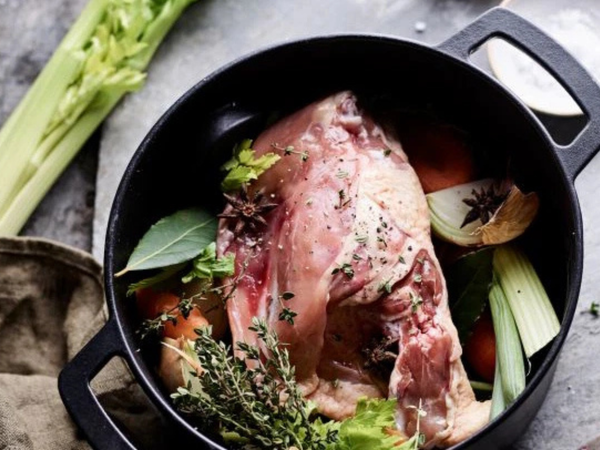
- Organic Lamb Shank is rich in connective tissue and good for gelatinous, full-bodied stock.
Organic Pork Bones
You can use pork bones to create a silky broth with a naturally sweet undertone. Widely used in traditional European and Asian broths, pork bones deliver high levels of collagen.
For instance, our Organic Pork Trotters are exceptionally rich in connective tissue and release substantial amounts of collagen, yielding a richer stock with a flavourful mouthfeel. However, if you want the balanced pork bone broth, consider our Organic Pork Stock Bones.
Wild Venison Bones and Organic Salmon Frames
If you want to experiment beyond traditional beef or chicken, Venison broth is bold and earthy, while salmon frames produce a delicate broth suited to seafood soups and sauces.
- Wild Venison Bones are lean but deeply flavoured, ideal for game-based broths.
- Organic Salmon Frames are perfect for lighter, mineral-rich fish stock.
When selecting bones, prioritise joints, knuckles, necks, feet, and marrow. These cuts release the most collagen during long cooking times. You can also mix different bones, for example, beef knuckles with marrow bones, to create balance.
Other Ingredients
For every pot of bones, add:
- Filtered water or cold water (enough to cover the bones by 2–3 cm)
- 1-2 tablespoons apple cider vinegar or vinegar
- Onions
- Carrots
- Celery
- Garlic
- Bay leaves
- A moderate amount of salt
We recommend adding the apple cider vinegar to support mineral extraction, but you won’t taste it in the finished broth. You can also use lemon juice as an alternative.
Optional Additions for More Flavour
- Roasted bones for deeper colour.
- A splash of soy sauce for umami depth.
- Fresh herbs.
- A small amount of black pepper.
Also, remember that too many vegetables can overpower the natural flavour of the meat bones.

How to Make Bone Broth: Recipe for Traditional Hob Method
The traditional hob method is a classic technique that produces exceptional results. Here's the step-by-step guide to making bone broth in a small or big pot.
Step 1: Roast the Bones
Preheat your oven to 200°C (180°C fan), then arrange beef, chicken, duck, or lamb bones in a roasting pan. Roast for 30-45 minutes until golden brown.
Roasting is necessary to intensify the flavour and give the broth a deeper colour. If you’re using a whole chicken or duck carcass from a roast dinner, you can skip this step.
Step 2: Add Water and Vinegar
Transfer the roasted bones to a large pot or Dutch oven. Add filtered water until the bones are fully submerged, then add apple cider vinegar and allow the bones to sit in cold water for 20–30 minutes before heating. Also, add onions, carrots, celery, garlic, and bay leaves.
Step 3: Slow Simmer (Cooking Time Matters)
Boil the pot gently, then immediately reduce the heat and maintain a very low simmer. The surface should barely move.
Cooking Time Guidelines:
- Chicken Bone Broth: 12-24 hours.
- Beef Bone Broth: 24 hours, up to 48 hours.
- Lamb Broth: around 24 hours.
- Pork Bones: 12-24 hours.
- Duck Bone Broth: 12-24 hours.
- Wild Venison Bones: 24 hours.
- Salmon Fish Frames: 12 hours.
During the first hour, skim any foam with a slotted spoon. That foam consists of impurities released from the meat and bones. Avoid boiling vigorously as low heat preserves clarity and improves flavour.
Step 4: Skim and Strain
After the full cooking time, turn off the heat and allow the broth to cool slightly. Strain through a fine-mesh strainer or sieve into a clean, large pan. Discard the spent bones and vegetables.
Step 5: Cool and Store
Allow the broth to cool slightly before transferring to jars. Place in the fridge, and once chilled, you should see a gel-like texture beneath a thin layer of fat. That fat protects the broth during storage.

Slow Cooker and Instant Pot Methods
Modern kitchens make it easier to cook bone broth without having to monitor the hob all day.
How to Make Bone Broth in a Slow Cooker
Place the roasted bones in the slow cooker, add the vegetables, vinegar, and filtered water, and set it to the lowest setting. The slow cooker maintains consistent low heat, ideal for overnight cooking, and produces a clear, steady simmer.
- Chicken Bone Broth: 12-18 hours.
- Beef Bone Broth: 24 hours.
- Lamb Broth: around 24 hours.
- Pork Bones: 12-24 hours.
- Duck Bone Broth: 12-18 hours.
- Wild Venison Bones: 24 hours.
- Salmon Fish Frames: 12 hours.
How to Make Bone Broth in an Instant Pot
The Instant Pot significantly reduces cooking time. Here's how to make bone broth in an Instant Pot:
- Add bones, vegetables, vinegar, and filtered water, and cook on high pressure:
- Reduce the heat to the lowest setting.
- Partially cover and simmer for at least 5 hours.
- You can cook it longer, but at least 5 hours.
Pressure cooking extracts collagen efficiently, though it won’t exactly replicate a 24-hour traditional simmer. For busy households, the Instant Pot offers convenience without compromising too much depth.

How to Know if Your Bone Broth Is Done
Even experienced cooks occasionally run into issues. Here are the most frequent questions from people who've tried making bone broth.
Why Didn’t My Bone Broth Gel?
Common causes:
- Too much water
- Insufficient connective tissue
- Cooking time too short
Use marrow bones, knuckle bones, or chicken feet to make a richer stock.
Why Is It Cloudy?
You likely allowed it to boil too hard. Maintain a low simmer and reduce the heat after bubbles become aggressive.
Why is the Flavour Too Weak?
Simmer uncovered for an extra hour to reduce the liquid. Roasting bones thoroughly before cooking also improves flavour.

Storing, Freezing, Using Homemade Bone Broth
Properly storing your bone broth will preserve its quality over time.
Fridge Storage
Store in airtight jars in the fridge for 4-5 days, and leave the fat cap intact until reheating.
Freezer Storage
Portion and put it in the freezer section for 3-6 months. You can use ice cube trays for small amounts, while larger containers are better for batch cooking.
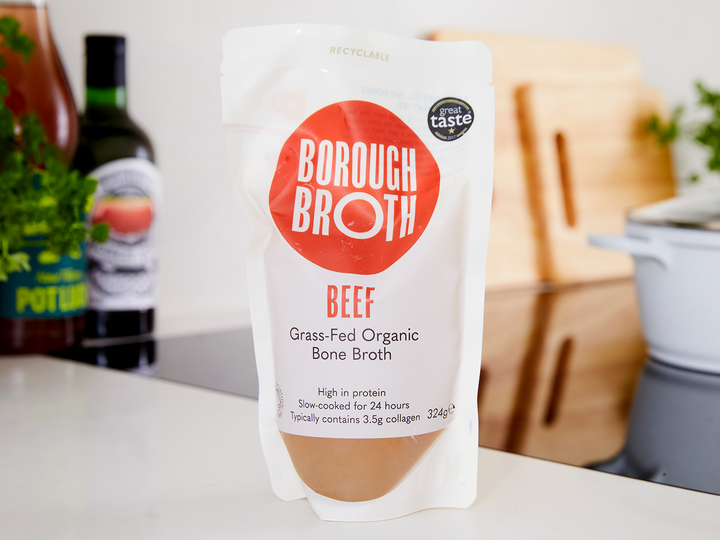
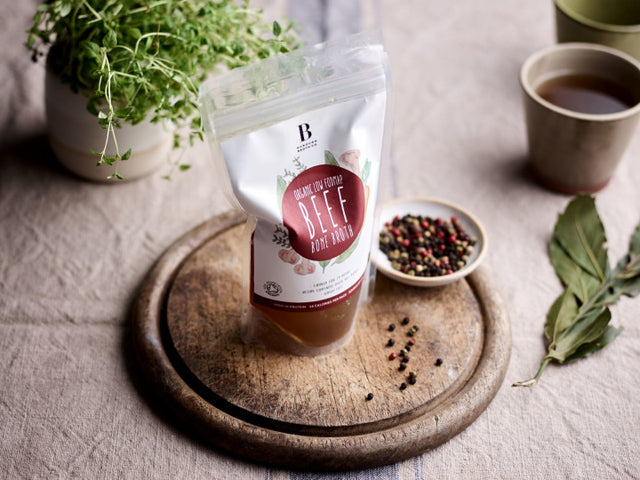
If you don't have the time to make a proper broth, we offer our ready-made organic chicken bone broth and organic beef bone broth, both delivered fresh and with a minimum 1-month shelf life. We also offer low FODMAP organic chicken broth, low FODMAP organic beef broth, and organic lamb bone broth, prepared from certified organic bones with the same traditional principles you’d use at home.
How to Use Bone Broth
You can use your bone for many homemade delicacies, such as:
- As a base for soups.
- In stews.
- To cook grains instead of vegetable stock.
- Reduced to gravy.
- Sipped warm with a pinch of salt.
A good broth transforms everyday cooking, adding flavour to sauces and depth to simple dishes.
Frequently Asked Questions
Can You Reuse Bones to Make Bone Broth Again?
You can reuse bones once, but the second batch will be noticeably lighter. Most of the collagen, nutrients, and flavour come out during the first long simmer. If you decide to reuse them, add fresh vegetables and a small splash of apple cider vinegar to help draw out any remaining minerals. However, for a deeply nourishing broth with full flavour, use fresh connective tissue-rich bones, such as necks, joints, knuckles, or chicken feet, to produce excellent results.
Is Bone Broth Healthy?
Bone broth contains natural nutrient content, including amino acids, collagen, gelatin, trace minerals, and small amounts of vitamins derived from the bones and vegetables. Long-simmered broths have featured in ancestral traditions for centuries, often used to improve gut health or as part of a balanced, whole-food diet. The gelatine and amino acids support digestion, and collagen contributes to skin and joint health, which makes bone broth a nutrient-dense addition to everyday cooking.
Why Does the Recipe Call for Apple Cider Vinegar?
A small amount of vinegar helps extract minerals from the bones during the long cooking time. The acidity gently breaks down connective tissue, releasing collagen and nutrients into the broth. You won’t taste the vinegar once the broth simmers for hours. You can also use lemon juice in a similar way if you prefer it.
What’s the Difference Between Bone Broth and Regular Broth or Stock?
The main difference between bone broth and regular broth is cooking time and nutrient density. You'll only need a few hours to simmer regular stock or broth, but bone broth takes 12 to 48 hours. Although it's a longer process, it extracts more collagen and nutrients, which is why bone broth often gels when cooled.
Why Didn’t My Bone Broth Gel in the Fridge?
A gel-like texture forms when collagen breaks down into gelatin. If your broth didn’t gel, it may be due to:
- Too much water.
- Short cooking time.
- Lack of enough connective tissue in the bones.
Ensure you use bones heavy in connective tissue, such as necks, joints, knuckles, chicken feet, and marrow bones, to release the most collagen. If you want a thicker stock next time, increase the proportion of these bones and cook the beef for a full 24 hours or longer.
How Should I Store Bone Broth?
Once strained through a fine-mesh strainer, allow the broth to cool slightly before refrigerating.
- Store in the fridge for up to five days.
- Freeze for up to three months for longer storage.
After chilling, a layer of fat will solidify on top. You can leave it in place to protect the broth or scoop it off and use it like cooking oil. For convenience, freeze portions in jars or ice cube trays and keep chicken bones in an airtight container in the freezer.
How Do I Reheat and Use Bone Broth?
If you want to reheat your bone broth, pour out the amount you need and warm gently on the hob over low heat. Avoid boiling aggressively.
You can use bone broth in any recipe that calls for stock. Use it for:
- Soups and stews.
- Sauces and gravies.
- Cooking rice or grains.
- Adding to scrambled eggs for extra richness.
It adds more flavour and body than standard stock, and you can sip it warm with a pinch of salt. You can also include it in your recipe card since bone broth adapts easily to different cuisines and dishes.
Can Bone Broth Support Gut Health and Overall Wellness?
Bone broth contains naturally occurring amino acids and gelatin, which help support gut health when consumed as part of a balanced diet. It’s also rich in easily digestible nutrients, including collagen and trace minerals, and you can add fresh ginger, turmeric, and herbs for additional anti-inflammatory properties.
Conclusion
Learning how to make bone broth reconnects you with traditional cooking and requires bones, water, vegetables, and patience. Start by using certified organic bones. At Organic Butchery, we believe good food begins at the farm. We work closely with organic farms across Devon and the West Country, ensuring every cut, from marrow bones to whole chicken carcasses, reflects exceptional welfare and sustainable practice.
If you’re ready to make bone broth, start with bones you trust. But if you prefer convenience, we prepare our ready-made broths with the same respect for flavour and traditional cooking.