To many people, “organic” is a word that carries weight. It suggests higher standards, animal welfare, fewer chemicals, and a more considered approach to farming. But what exactly is organic? Is it pesticide-free, hormone-free? Is organic food actually healthier, or simply different?
This guide explains exactly what organic means, how organic farming works, what certification entails, and why organic meat and produce are subject to strict regulations. We'll also consider the environmental impact, animal welfare, and whether or not it’s worth the added expense.

What Does the Term Organic Refer to in the UK?
In the UK, the word “organic” is protected by the assimilated EU legislation (Regulations 834/2007 and 889/2008) and implemented by the Organic Products Regulations 2009. Therefore, organic foods must meet strict standards set by recognized organic certification bodies, such as Organic Farmers and Growers CIC, and comply with UK legislation.
The Organic Products Regulations 2009 are the primary domestic "enforcement" instrument. It provides the legal "teeth" by setting out the penalties, inspection powers, and the requirement for businesses to be registered with a UK-approved control body.
The Legal Definition of Organic Food
In the UK, organic food refers to “any food produced according to strict standards set by recognized organic certification bodies and complying with UK Organic Products Regulations 2009.” These rules govern every stage of food production, from soil management to livestock feed additives, processing, storage, and labelling.
In order to use the term “organic,” a food producer must:
- Adhere to certified organic farming methods.
- Refrain from using most synthetic fertilisers and pesticides.
- Prohibit the use of genetically modified organisms.
- Restrict the use of antibiotics.
- Keep detailed records with annual inspections.
Without certification, “organic” can't appear on a package or label of food and drink. This is an important guarantee for consumers, as it means certified organic products meet recognized standards, not just marketing claims.
What Are Organic Foods Exactly?
These foods include organic fruit, vegetables, dairy products, meat, fish, and processed products produced under approved organic systems. They grow without artificial fertilisers or synthetic chemicals, relying on natural processes, such as crop rotation and nutrient cycling, to maintain healthy soil.
Organic meat comes from farm animals raised with strict welfare standards. This means they have access to the outdoors, a natural diet, and space to engage in their natural behaviours. For instance, our organic beef, organic chicken, organic lamb, organic duck, and organic turkey meats come from free-range animals born and reared on our lush, beautiful, sustainable pastures in the West Country.
Organic production also prohibits the use of non-organic ingredients, such as artificial nitrates, in processed foods. If a food label states “made with organic ingredients,” this means that at least 95% of the agricultural ingredients are organic. So, organic means a regulated farming system that works with nature to support ecological balance, soil quality, animal and plant welfare, and long-term environmental sustainability.
Organic vs “Natural” vs “Free-Range”
Many people confuse organic with other terms on a food label.
- Natural has no strict legal definition in the UK.
- Free-range refers mainly to outdoor access for poultry, lamb, or beef.
- Organic, however, covers the entire farming system, from soil to shelf.
Just because eggs are labelled free-range, it doesn’t mean that the food the hens eat is organic. Similarly, a "natural" product may come from conventional farming that uses artificial fertilisers or chemical pesticides. When you want assurance about standards across the whole farming system, certified organic is the benchmark.

How Organic Farming Works
Organic farming isn’t about avoiding chemicals. It’s a holistic system based on soil quality, biodiversity, and long-term environmental sustainability.
Soil Health and Natural Fertility
The first aspect of organic farming is soil. Soil is a non-renewable resource, and farmers must ensure it remains healthy through:
- Crop rotation.
- Animal manure.
- Composting.
- Cover crops.
- Natural nutrient cycling.
Crop rotation stops soil depletion and minimizes pesticide use. Rotating organic crops, such as legumes, naturally enriches the soil with nitrogen, eliminating the need for artificial fertilisers. Since farmers prioritise soil health, organic farming methods help produce healthy food while protecting natural resources.
Pest and Weed Management Without Chemicals
In organic farming, there’s no use of chemical pesticides. Instead, organic farmers use:
- Biological controls.
- Naturally derived pesticides through organic chemistry.
- Natural predators.
- Mechanical weeding.
- Strong soil ecosystems.
You can use natural pesticides, although they are carefully regulated. The idea is to prevent problems rather than resort to heavy intervention. This approach reduces pesticide exposure and pesticide residues in food compared with many non-organic counterparts.
Organic Farmers and Long-Term Land Stewardship
Organic farmers take a different view of land, seeing it as a living system rather than a resource to be used for short-term output. Preserving natural ecosystems is central to this farming model.
Organic agriculture helps preserve waterways and wildlife habitats by avoiding artificial chemicals and artificial fertilisers. In Devon, across the West Country, many estates that use organic farming methods play a significant role in maintaining a balanced ecosystem where plants and animals flourish.

Organic Certification: What the Label Really Means
Consumer trust relies heavily on organic certification.
Organic Certification Bodies in the UK
In the UK, there are several organic certification bodies, including:
- Soil Association Certification Ltd.
- Organic Farmers and Growers CIC.
- Organic Food Federation.
- Biodynamic Association Certification.
- Quality Welsh Food Certification Ltd.
One of the most well-known names in organic food is the Soil Association Certification Ltd. If you see the Soil Association logo or the organic symbol on any food product, it means the farmer has passed strict inspections.
These organic food certification bodies ensure that farms and food businesses comply with organic standards in every aspect of food production.
Annual Inspections and Traceability
Organic food farmers don’t just pass any inspection. They go through:
- Annual inspections.
- Full traceability.
- Audit of detailed records.
- Verification of supply chains.
Every step in the organic food certification system is geared towards maintaining quality and integrity in food production and consumption.
How to Read a Food Label Properly
In order to identify genuine organic food products, you can:
- Look for food products bearing any of the food certification logos, such as the Soil Association logo.
- Look for the certifier's code.
- Look at the percentages of ingredients.
A genuine organic food product will always bear the mark of an approved food certifying body.
Callout: How to Spot Genuine Organic Food
- Look for the Soil Association organic symbol.
- Look for “certified organic” on the food label.
- Avoid food products labelled “natural” but not “certified organic.”
If you do not see any of these symbols on your food label, then it’s not organic.

Organic Meat and Animal Welfare Standards
When it comes to organic meat, the standards go far beyond the fertilisers and feeds discussed above.
What Makes Organic Meat Different?
Organic livestock production requires:
- Outdoor access.
- Space for the animals to express natural behaviour.
- Organic feed.
- No routine use of antibiotics.
- No growth hormones.
- Strict welfare oversight.
Organic farmers raise animals under organic standards, ensuring they live in environments with lower stocking densities than in many non-organic farming systems. There’s no routine use of antibiotics. Antibiotics can be used only when necessary to treat animal health problems, and the withdrawal period is longer than in non-organic systems.
Slower Growth, Better Flavour
Organic farming prioritises the natural growth rates of the animals. Organic farmers don’t force their animals to grow quickly. Slower maturation results in:
- Improved texture.
- Better marbling.
- Fuller flavour.
Note that organic food quality mostly depends on time, diet, environment, and welfare conditions.
Ethical Sourcing and Traditional Butchery
At Organic Butchery, ethical sourcing is at the heart of everything we do. Our award-winning organic meat range includes premium products, recognised by the Taste of the West, Great Taste Awards, and Best of Organic Market (BOOM) awards. Browse our award winners and pick the organic meat cut closest to your heart and taste.
We source directly from trusted organic farmers who adhere to organic standards. For more than 30 years, our trusted farmers across Devon have farmed cattle, sheep, and poultry with a focus on soil quality and animal welfare.
Our skilled butchers are the heart of our operation. They prepare each cut with precision and respect for every part of the animal. That’s why all our meat is certified organic, ethically sourced, and prepared with care to bring the desired flavour to your table.

Is Organic Food Healthier?
Many people ask Google if organic food offers health benefits. Research done by Benbrook et al. (2021) in the Agronomy Journal shows that organic produce contains lower levels of pesticide residues than conventionally grown foods.
Crinnion (2010), in Alternative Medicine Review, also established that reduced pesticide exposure can benefit human health over time. Organic food also avoids synthetic chemicals, synthetic fertilisers, and genetically modified organisms. Organic milk and dairy products must meet strict feed and welfare rules.
Nutrient content of organically grown crops is slightly different from that of non-organic foods. Some studies have found that organic crops contain slightly higher levels of antioxidants and vitamin C (Crinnion, 2010). But the main advantage is the use of cleaner production methods. Organic food is about cleaner production methods, not magical nutritional differences.

Environmental Sustainability and Organic Food Production
According to Niggli (2015), in the Proceedings of the Nutrition Society, organic food production contributes to environmental sustainability through the following:
Reduced Chemical Runoff
Organic farming reduces chemical runoff into rivers and soil systems by restricting the use of artificial fertilisers and synthetic pesticides.
Carbon and Soil Sequestration
Healthy soils rich in organic matter help reduce greenhouse gas emissions by storing carbon. Organic farming practices such as crop rotation and manure application improve soil structure and resilience.
Wildlife and Biodiversity
Organic farms often support greater biodiversity. Hedgerows, diverse crop systems, and reduced chemical inputs create habitats for pollinators and wildlife.
In the West Country, for instance, carefully managed estates contribute to vibrant natural ecosystems that support both organic farming and wildlife.
Why Organic Food Costs More
Organic food costs more for clear reasons, including:
- Labour-intensive farming methods.
- Small-scale farming.
- Slow animal growth.
- Certification costs.
- Low yields per acre.
Organic farmers invest in soil health and long-term land care rather than maximising short-term output. When you buy organic food products, you’re paying for quality over quantity, environmental stewardship, higher welfare standards, and verified production methods.
Frequently Asked Questions
Is Organic Food Completely Pesticide-Free?
No. Organic food isn't completely pesticide-free, but organic practices strictly limit the use of synthetic pesticides. Instead, farmers rely on crop rotation, soil health, and approved natural substances. As a result, organically produced plants typically contain lower pesticide residues than conventionally produced food, which is the main reason many people choose to eat organic food as part of a healthy diet.
Does Organic Mean Hormone-Free?
Yes. Organic meat in the UK must be hormone-free, with growth hormones prohibited under organic standards. Organic livestock production standards also prohibit the routine use of antibiotics. You can only treat the animals when necessary to support their welfare and responsible farming.
Are Organic Eggs and Meat Better for Children?
Both organic and conventional food must meet UK safety standards. However, many parents prefer organic eggs, dairy, and meat to reduce exposure to synthetic pesticides and routine antibiotics.
Organic animal products come from farm animals raised under high-welfare and natural conditions. Research published by Średnicka-Tober et al. (2016) in the British Journal of Nutrition shows that organic meat and dairy contain higher levels of omega-3 fatty acids than non-organic alternatives, which supports interest in a balanced organic diet.
Is Organic Worth the Extra Cost?
Organic products typically cost 10% to 50% more than similar conventionally produced food, sometimes more. The higher price tag reflects high labour costs, low yields, slow growth, and strict certification requirements. For many households, organic food is worth the extra cost because of environmental sustainability, animal welfare, quality over quantity, and transparency.
Is Organic Fish Different?
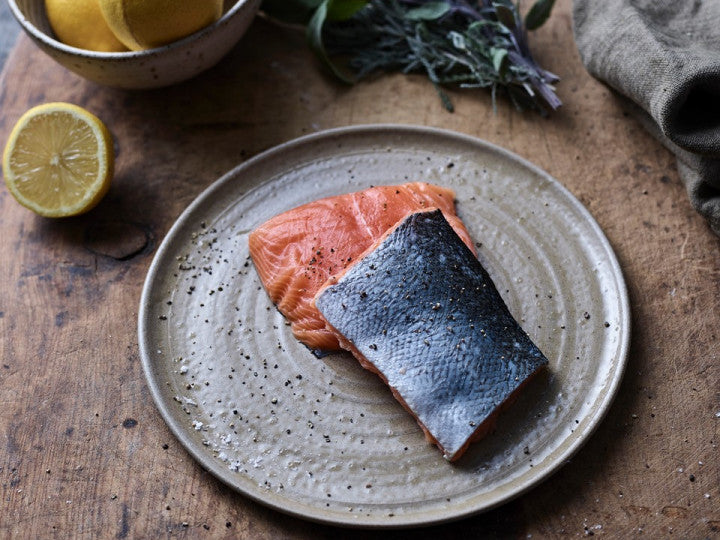
Yes. We source our organic fish from farmers who adhere to certified organic standards that regulate feed, water quality, and stocking density. Wild fish can't be certified organic because they're not produced within a regulated farming system. Organic aquaculture, however, follows clearly defined organic practices.
What Does “Made with Organic Ingredients” Mean?
In the UK, at least 95% of a product’s agricultural ingredients must be organic to carry the organic label. Products marked “made with organic ingredients” must still meet strict organic certification requirements. Always look for the Soil Association logo or other recognised organic certification bodies on the food label to confirm authenticity.
Does Organic Farming Help Cut Greenhouse Gas Emissions?
Organic farming can help reduce greenhouse gas emissions compared to some conventional farming systems. Organic systems rely more on natural processes, avoiding synthetic fertilisers and supporting soil quality. Healthy soils store carbon, and organic farming often supports greater biodiversity, contributing to long-term environmental sustainability.
How Do I Verify Organic Certification?
To verify certified organic products in the UK:
- Look for the Soil Association logo.
- Check the named organic certification body.
- Confirm the product is labelled “certified organic.”
The word organic is legally protected. If there's no recognised certification mark, the product isn't organic.
Conclusion: So, what does organic mean?
In the UK, it means farmers working within a regulated farming system designed to protect soil health, animal welfare, natural processes, and environmental sustainability. Organic also means integrity across the entire food production chain, with fewer synthetic chemicals, stricter oversight, and a commitment to natural processes.
When you choose certified organic food, particularly organic meat raised to high welfare standards, you invest in transparency, craftsmanship, and long-term land stewardship. If you value exceptional flavour, ethical sourcing, and award-winning quality, explore our full range of certified organic collections at Organic Butchery. We’re always here to help you choose the very best.
References
- Crinnion, W. J. (2010). Organic foods contain higher levels of certain nutrients, lower levels of pesticides, and may provide health benefits for the consumer. Alternative Medicine Review, 15(1).
- Benbrook, C., Kegley, S., & Baker, B. (2021). Organic farming lessens reliance on pesticides and promotes public health by lowering dietary risks. Agronomy, 11(7), 1266.
- Niggli, U. (2015). Sustainability of organic food production: challenges and innovations. Proceedings of the Nutrition Society, 74(1), 83-88.
- Średnicka-Tober, D., Barański, M., Seal, C., Sanderson, R., Benbrook, C., Steinshamn, H., ... & Leifert, C. (2016). Composition differences between organic and conventional meat: a systematic literature review and meta-analysis. British Journal of Nutrition, 115(6), 994-1011.
- The National Archives. (2009). The Organic Products Regulations 2009 (SI 2009/842).